

Palm Beach County Property Taxes Explained: What Every Home Buyer Should Know
Table of Contents
- Why Are Property Taxes So High in Palm Beach County?
- How Property Taxes Are Calculated
- Understanding Market Value, Assessed Value, and Taxable Value
- How to Estimate Property Taxes Before You Buy
- Ways to Save Money on Property Taxes
- 3 Smart Tips for Palm Beach County Home Buyers
- FAQs About Palm Beach County Property Taxes
- Final Thoughts
Why Are Property Taxes So High in Palm Beach County?
If you're buying a home in Palm Beach County, one of the biggest surprises can be the property taxes. Many buyers notice that two similar homes can have very different tax bills, or that taxes seem much higher than expected after purchasing.
The reality is that several factors influence property taxes, and understanding them before you buy can help you avoid expensive surprises.
The biggest reasons property taxes tend to be higher include:
- Home values have increased significantly over the past several years.
- Florida has no state income tax, so local governments rely heavily on property taxes to fund schools, police, fire departments, parks, and infrastructure.
- Many newer communities include Community Development District (CDD) fees, which are added to the annual tax bill and can remain in place for 20–30 years.
Understanding these factors before purchasing allows buyers to budget more accurately.
How Property Taxes Are Calculated
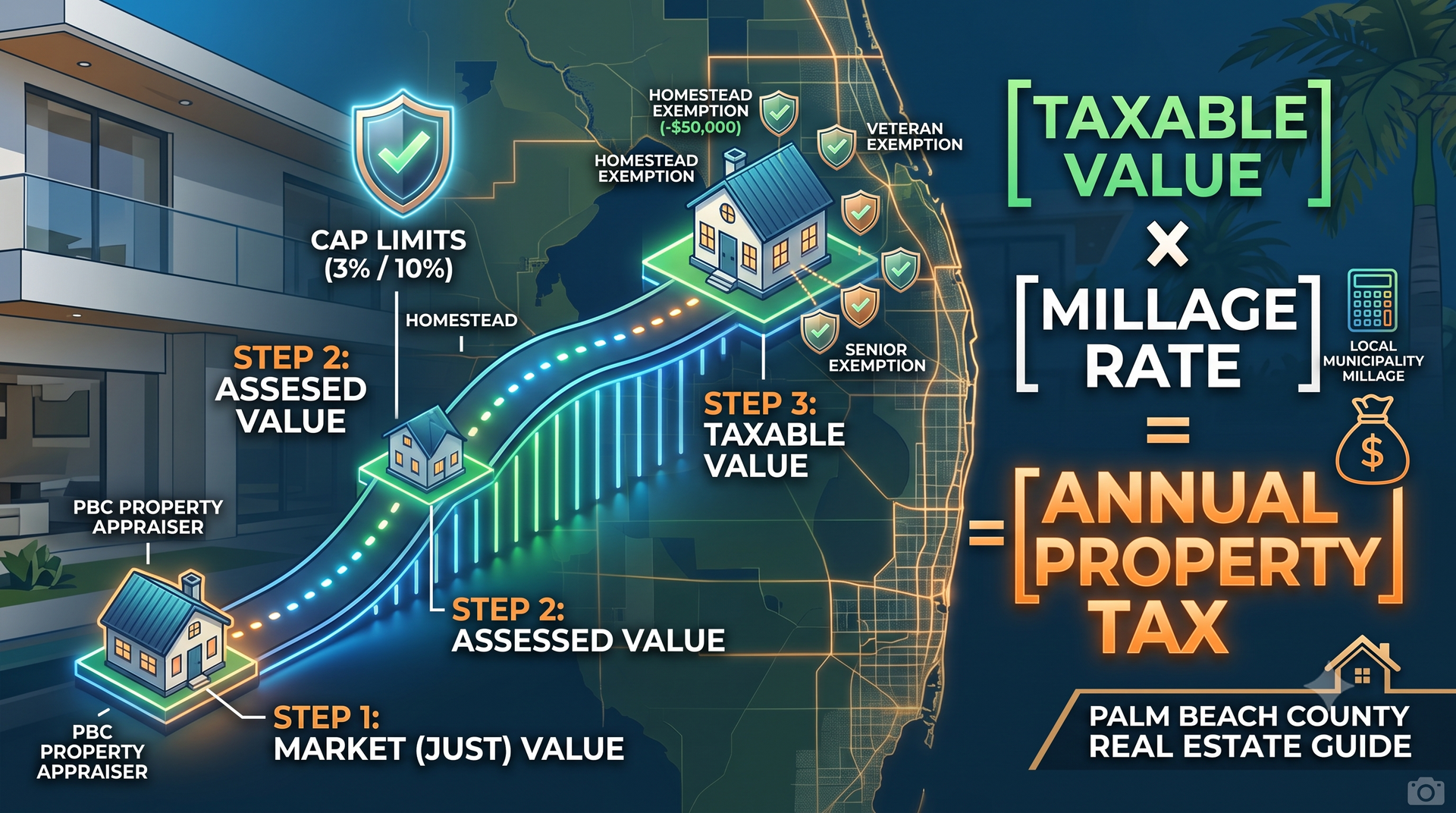
Palm Beach County property taxes are based on several different values, not simply the home's purchase price.
Each year, the Palm Beach County Property Appraiser determines a property's value as of January 1. From there, taxes are calculated using several components.
These include:
- Market (Just) Value
- Assessed Value
- Taxable Value
- Millage Rate
While these terms may sound confusing, they each play a specific role in determining your annual tax bill.

Understanding Market Value, Assessed Value, and Taxable Value
Market Value (Just Value)
Market value represents what the Property Appraiser believes your home is worth. Rather than relying on one individual, Palm Beach County uses a Computer Assisted Mass Appraisal (CAMA) system that analyzes neighborhood sales, home characteristics, and market trends to estimate value.
Assessed Value
The assessed value starts with the market value but applies legal limitations on annual increases.
For example:
- Homesteaded properties generally cannot increase by more than 3% annually.
- Non-homesteaded properties are generally capped at 10% annual increases.
- These limits can significantly reduce future tax increases for long-term homeowners.

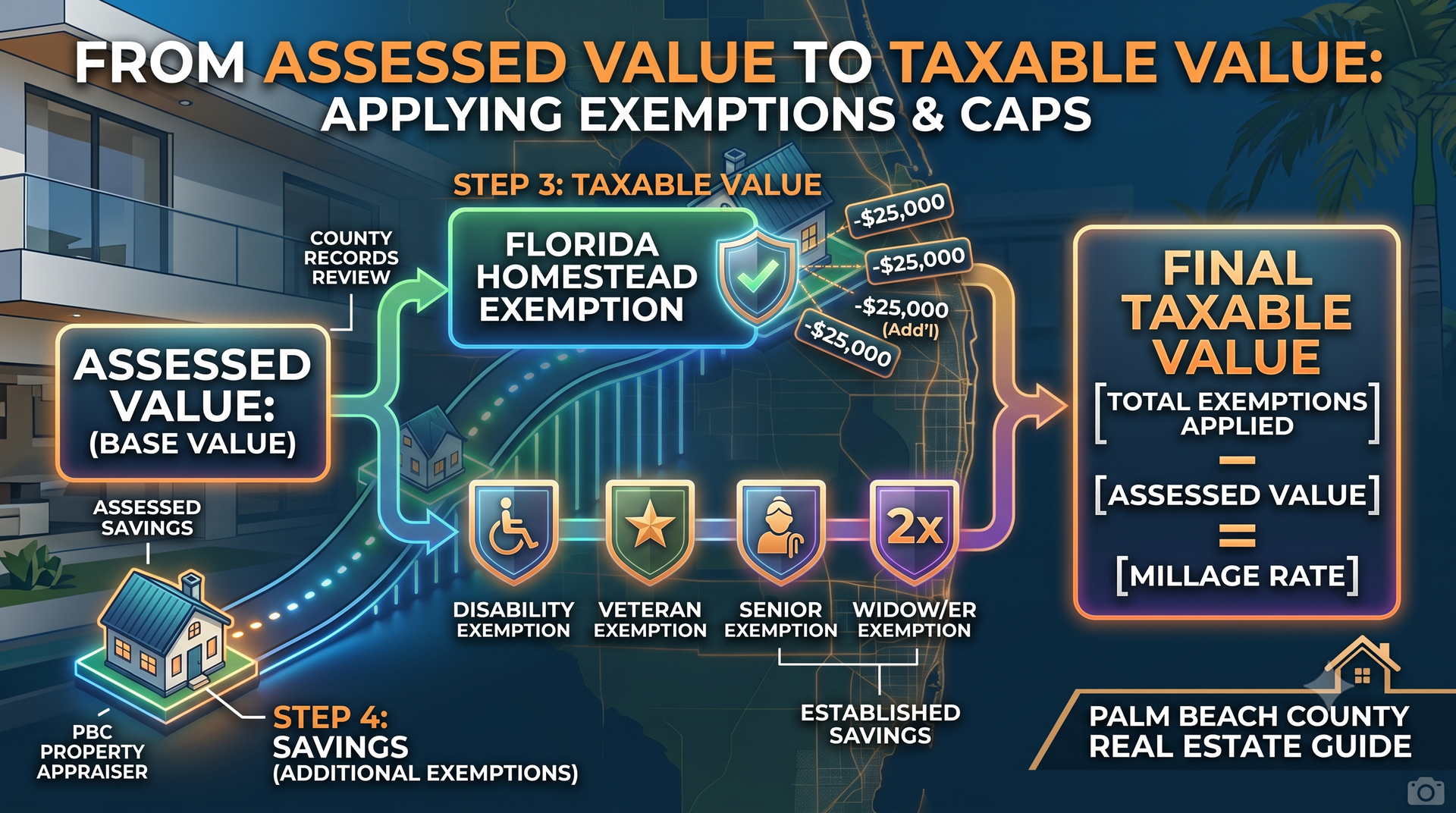
Taxable Value
Your taxable value is determined after exemptions have been applied.
The most common exemption is Florida's Homestead Exemption, which can reduce the taxable value of your primary residence by up to $50,000, depending on how the exemptions apply.
Millage Rate
The final step is applying the millage rate. A mill equals $1 of tax for every $1,000 of taxable value. Each municipality in Palm Beach County has its own millage rate, which is why identical homes in different cities may have different annual tax bills.
Example: Estimating Property Taxes
Let's look at a simplified example.
Assume you purchase a home with an assessed value of $700,000.
If the home qualifies for the Homestead Exemption:
- Assessed Value: $700,000
- Homestead Exemption: -$50,000
- Taxable Value: $650,000
If the applicable millage rate is 22.34, the estimated annual property tax would be approximately:
650 × 22.34 = $14,521
While every property is different, this example illustrates how taxes are calculated.
Ways to Save Money on Property Taxes
Fortunately, there are several ways homeowners can reduce their overall tax burden.
Pay Your Taxes Early
Palm Beach County offers discounts for paying property taxes before the March deadline.
Current discounts include:
- 4% if paid in November
- 3% if paid in December
- 2% if paid in January
- 1% if paid in February
After March 31, taxes become delinquent.
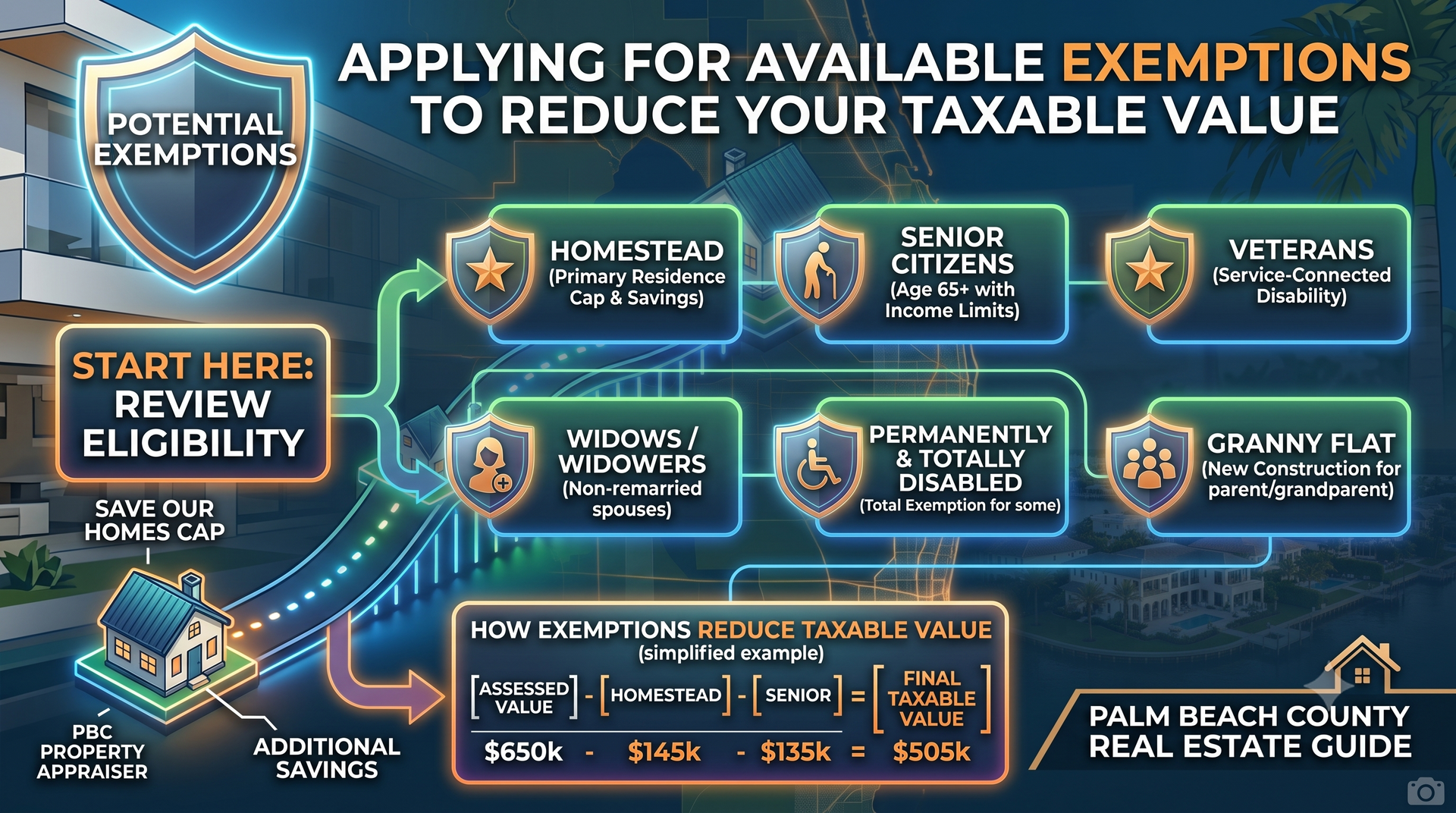
Apply for Available Exemptions
The Homestead Exemption is the most common, but many homeowners qualify for additional savings.
Other exemptions may include:
- Veteran exemptions
- Active military exemptions
- Widow or widower exemptions
- Disability exemptions
- Senior exemptions
- Certain caregiver or "granny flat" exemptions
These programs can significantly reduce your taxable value depending on your circumstances.
Take Advantage of Portability
If you're already a Florida homeowner, portability may allow you to transfer up to $500,000 of accumulated tax savings from your previous homesteaded property to your next Florida home.
For many buyers, portability can result in thousands of dollars in long-term tax savings.

3 Smart Tips for Palm Beach County Home Buyers
1. Estimate Taxes Before Making an Offer
Ask your Realtor to run a property tax estimate using the Palm Beach County Property Appraiser's tax estimator.
This provides a much more accurate idea of what your first-year taxes could look like.
2. Review Your Property Assessment Carefully
Mistakes happen. Incorrect square footage, bedroom counts, lot sizes, or missing information can all affect your assessment.
Always review your property's records after purchasing.
3. Appeal an Incorrect Assessment
If you believe your assessed value is too high, Palm Beach County offers an appeal process. Appealing during your first year of ownership is especially important because it establishes the baseline for future tax increases under Florida's Save Our Homes protections.
FAQs About Palm Beach County Property Taxes
Why are my taxes higher than my neighbor's?
Homes purchased at different times often have very different assessed values because long-term homeowners benefit from Florida's annual assessment caps and exemptions.
Do property taxes reset after buying a home?
Yes. In many cases, the property's assessed value is adjusted after a sale, which can significantly change the tax bill for the new owner.
What is the Homestead Exemption?
Florida's Homestead Exemption can reduce the taxable value of your primary residence while also limiting future assessment increases through the Save Our Homes cap.
Can I lower my property taxes?
Yes. Paying early, applying for all available exemptions, reviewing your assessment for errors, and appealing incorrect valuations can all help reduce your tax bill.
Final Thoughts
Property taxes are one of the most important costs to understand before buying a home in Palm Beach County. While they can seem complicated at first, knowing how market value, assessed value, exemptions, and millage rates work together can help you make smarter financial decisions and avoid unexpected costs after closing.
If you're planning to buy a home in Palm Beach County and would like an estimate of what your property taxes could be before making an offer, we're happy to help. Call or text Chris Dyer at
(561) 944-2811 or email
Chris@EbStoneRealty.com. We can run a personalized property tax estimate and help you make an informed decision before you buy.
Eb Stone Realty
Your source for clear, local insight on Palm Beach County real estate, from market trends and neighborhood highlights to buying and selling tips that actually help.
SHARE THIS
Prefer To Read
Recent Updates and Insights.
From market trends to home-buying tips, explore valuable insights to guide your next move.